Yin and Yang Through the Lens of Modern Biology
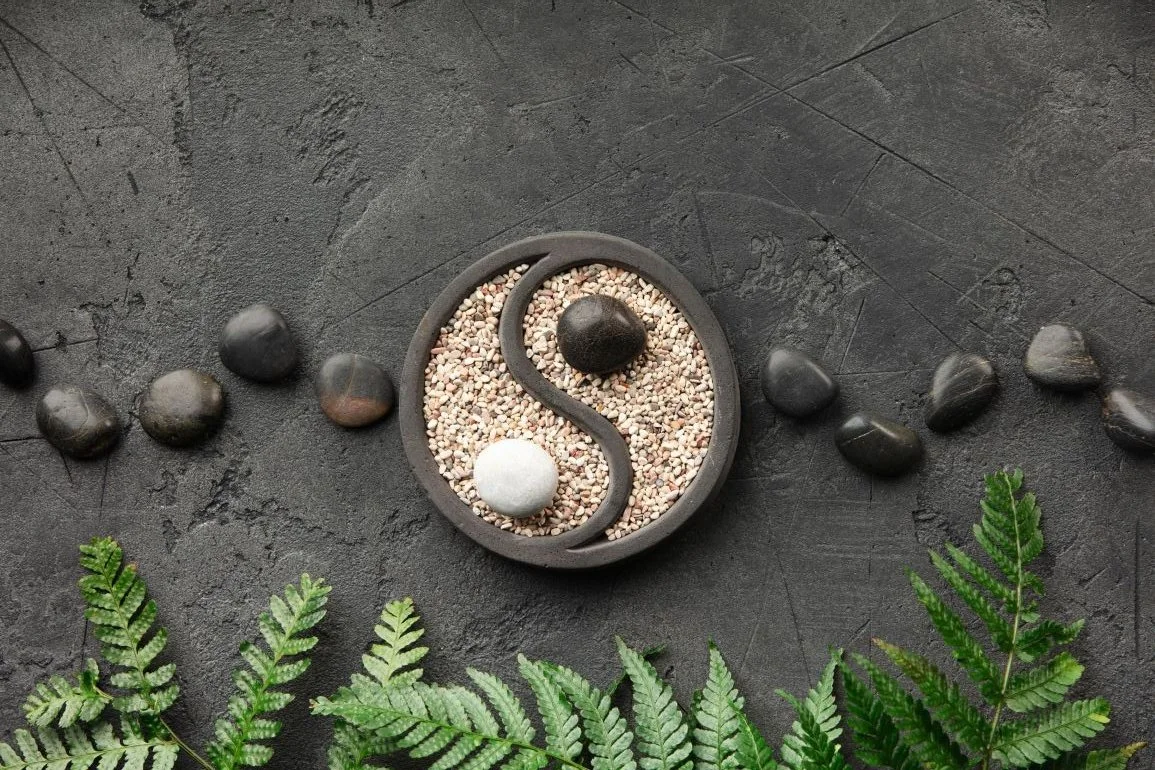
For more than 2,000 years, Traditional Chinese Medicine has described health through the dynamic balance of Yin and Yang. Yet these concepts are often misunderstood. To some people, Yin and Yang may sound mystical, philosophical, or incompatible with modern science.
Perhaps the problem is not Yin and Yang. Perhaps it is simply the language.
Yin and Yang are not invisible forces. They offer a way of describing how living systems organize, regulate, and restore themselves. Modern biology uses terms such as homeostasis, autonomic regulation, metabolism, and energy allocation. Traditional Chinese Medicine described many of these dynamic relationships thousands of years ago through the language of Yin and Yang.
These frameworks are not identical, but they often point toward similar observable patterns within the human body. Rather than competing explanations, they offer two distinct lenses through which we can understand the remarkable intelligence of living systems.
Today, the work of mitochondrial researcher Dr. Martin Picard emphasizes that health depends not only on producing biological energy, but also on how efficiently that energy is allocated, conserved, and restored. At every moment, our cells must decide where to invest limited resources—whether to fuel movement, repair tissue, support immunity, digest food, regulate hormones, or adapt to physical and emotional demands.
Traditional Chinese Medicine recognized a similar fundamental principle through the relationship between Yin and Yang: health is not a fixed state. It is a dynamic balance.
What Do Yin and Yang Mean in the Human Body?
Classical Chinese medicine describes four fundamental relationships between Yin and Yang: opposition, interdependence, mutual consumption, and mutual transformation. Together, these principles describe a living system that is continuously changing and adapting.
Rather than viewing Yin and Yang as simple opposites, it is more useful to understand them as complementary biological processes.
Yang represents activity, movement, function, heat, adaptation, and energy expenditure.
Yin represents structure, nourishment, stability, cooling, restoration, and biological reserve.
Neither can exist without the other. Movement requires structure. Function depends on nourishment. Performance requires recovery. Health emerges from their continual interaction.
How Yin and Yang Appear in Modern Biology
The pattern of Yin and Yang appears repeatedly throughout human biology.
Life begins with the meeting of an egg and a sperm. The egg provides structure, nourishment, and the environment in which new life can develop—a Yin role. The sperm contributes movement and initiation—a Yang role. Neither alone can create life.
Blood provides another example. Blood is a physical substance that transports oxygen, nutrients, hormones, and immune cells throughout the body. It represents Yin. Yet blood can only nourish the tissues when it circulates. The heart’s pumping action and the movement of blood throughout the body represent Yang.
Without blood, there is nothing to circulate. Without circulation, blood cannot perform its nourishing function.
The body’s organs reveal the same organization. Traditional Chinese Medicine classifies the Heart, Liver, Spleen, Lung, and Kidney as Yin organs because they store, regulate, nourish, and sustain life.
Their paired hollow organs—the Small Intestine, Gallbladder, Stomach, Large Intestine, and Bladder—receive, transport, digest, separate, transform, and eliminate. Their primary roles involve movement and transformation, reflecting Yang functions.
Each organ depends on its partner. Structure supports function, while function protects and maintains structure.
Yin and Yang and the Autonomic Nervous System
Modern physiology offers another compelling example through the autonomic nervous system.
The sympathetic nervous system prepares the body for action. Heart rate may rise, blood pressure increases, glucose is mobilized, and attention becomes sharper. These active and adaptive functions resemble Yang.
The parasympathetic nervous system supports digestion, tissue repair, restorative sleep, and a return to calm. These nourishing and restorative functions resemble Yin.
Neither system is inherently better than the other.
We need sympathetic activation to exercise, respond to challenges, concentrate, and protect ourselves when necessary. We also need parasympathetic activity to digest food, sleep deeply, repair tissue, and replenish our biological reserves.
Health depends on flexibility—the ability to mobilize energy when a challenge arises and return to recovery after that challenge has passed.
This rhythm also appears throughout biology:
Sleep and wakefulness
Exercise and recovery
Anabolism and catabolism
Inflammation and resolution
Energy expenditure and energy conservation
Activity and rest
Life itself is a continual rhythm of Yin and Yang.
The Body Has a Limited Energy Budget
One of the most compelling ideas from modern mitochondrial research is that the body operates with a finite amount of available energy at any given moment.
We cannot continually add more demands without consequences.
Every workout, late night, illness, long flight, difficult conversation, and demanding workday draws from the same biological energy budget. Health therefore depends not only on producing energy, but also on how wisely we allocate, conserve, and restore it.
The body does not experience our responsibilities as separate categories. It does not create one energy account for work, another for exercise, another for parenting, and another for emotional strain. It experiences the cumulative demand placed upon the entire system.
When energy is repeatedly directed toward performance and adaptation, fewer resources may remain available for digestion, immune regulation, tissue repair, hormonal balance, and restorative sleep.
The Modern Yang Trap
One of the greatest challenges of modern life is not simply that we are busy. It is that we are trying to succeed in every area of life at once.
Many people work full-time while exercising five days a week. They travel across time zones, raise children, care for family members and pets, pursue side projects, maintain active social lives, and strive to follow a perfectly healthy lifestyle.
Individually, many of these activities are positive. Together, however, they can create a cumulative demand that exceeds the body’s capacity for recovery.
From the perspective of Traditional Chinese Medicine, this reflects an excess of Yang without sufficient Yin.
The problem is not ambition, exercise, or hard work. The problem is forgetting that every expenditure requires restoration.
Artificial light extends our days. Notifications keep our minds engaged. Coffee helps us push through fatigue, while alcohol is sometimes used to force relaxation at night. We celebrate productivity, but rarely celebrate recovery.
Yet biology does.
Muscles grow stronger during recovery. Memory consolidates during sleep. The immune system performs essential repair during periods of rest. The nervous system restores itself when the body experiences safety and calm.
Recovery is not the opposite of performance. Recovery is what makes continued performance possible.
Restoring Balance Through Acupuncture and Lifestyle
In my clinical practice at Nina Acupuncture in Westport, Connecticut, I often meet people whose bodies have remained in a prolonged state of activity and adaptation.
They may experience persistent muscle tension, disrupted sleep, digestive changes, headaches, fatigue, irritability, recurring pain, or difficulty recovering from exercise and everyday demands. Their symptoms may appear unrelated, but the body experiences them as part of one interconnected system.
Acupuncture does not simply force the body to relax or temporarily cover up a symptom. Treatment provides sensory input that may help support autonomic regulation and the body’s natural ability to move between activity and recovery.
Each treatment is personalized according to the patient’s symptoms, health history, physical demands, lifestyle, and underlying pattern of imbalance. Acupuncture may be combined with practical guidance related to sleep, movement, meal timing, breathing, and recovery.
The goal is not to remain relaxed all the time. It is to help the body regain flexibility—the capacity to respond when action is required and return to restoration when the demand has passed.
A Different Definition of Health
Perhaps health is not about having unlimited energy. Perhaps it is about learning to spend energy wisely.
Knowing when to act is Yang. Knowing when to restore is Yin.
The healthiest people are not necessarily those who remain constantly productive or permanently relaxed. They are those who can adapt—mobilizing energy when challenges arise and returning to recovery when those challenges have passed.
For thousands of years, Traditional Chinese Medicine has observed that health depends on dynamic balance. Today, modern physiology describes related patterns through homeostasis, autonomic regulation, metabolism, and energy allocation.
Yin and Yang are not relics of an ancient philosophy. They offer a timeless reminder that life thrives not through extremes, but through rhythm.
In a world that continually encourages us to do more, perhaps one of the greatest forms of wisdom is learning when enough is enough—and discovering our own rhythm between effort and restoration.
If pain, poor sleep, persistent tension, or difficulty recovering has disrupted your natural rhythm, personalized acupuncture may help support a healthier relationship between activity and restoration. Nina Acupuncture provides individualized acupuncture for pain management, sports injury recovery, nervous-system regulation, and whole-person wellness in Westport, Connecticut.
An earlier version of this article was originally published in Brainz Magazine.
Reference
Picard M, Trumpff C, Burelle Y. “Mitochondrial Psychobiology: Foundations and Applications.” Current Opinion in Behavioral Sciences. 2019;28:142–151.
Author Bio
Dr. Nina Jatuparisuthiseen, DAc, L.Ac., C.SMA
Dr. Nina is a licensed acupuncturist and founder of Nina Acupuncture in Westport, Connecticut. She specializes in evidence-informed pain management, sports medicine acupuncture, nervous system regulation, and integrative lifestyle medicine. With over a decade of clinical experience and more than 10,000 hours of hands-on care, she is dedicated to advancing patient-centered, nonpharmacological approaches to modern healthcare