

The Net & The Needle
How Acupuncture Helps Common Pickleball Injuries
Pickleball has rapidly become one of the fastest-growing sports in America, especially among active adults seeking movement, community, and long-term wellness. Yet alongside its rising popularity comes another growing trend: repetitive strain injuries affecting the elbow, shoulder, and knee.
In clinical practice, I increasingly see pickleball players struggling with pain that begins as mild soreness but gradually interferes with daily movement, sleep, and overall quality of life. Many continue playing through discomfort, only seeking treatment when symptoms become persistent or begin limiting performance.
As both an acupuncturist and a pickleball player myself, I understand how important it is not only to relieve pain, but to help people continue doing the activities they love with confidence and resilience.
Acupuncture has gained increasing recognition as a complementary therapy for pain management, sports recovery, and nervous system regulation (Vickers et al., 2018). Rather than focusing solely on symptoms, treatment often addresses movement patterns, muscular tension, circulation, and the body’s recovery response as a whole.
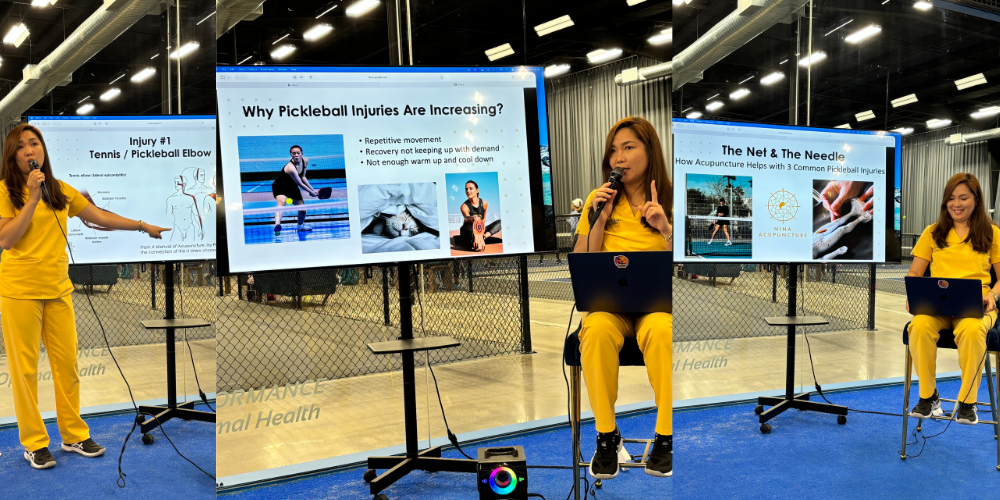
Featured in : Women's Wellness Day at the Sports Haus, Norwalk, CT
Here are three of the most common pickleball injuries I see in clinic and how acupuncture may help support recovery.
1. Tennis Elbow (Pickleball Elbow)
Tennis elbow, or lateral epicondylitis, is one of the most common overuse injuries among pickleball players. Repetitive gripping, swinging, and wrist extension can overload the tendons of the forearm, leading to pain and inflammation around the outer elbow.
Common symptoms include:
Pain on the outside of the elbow
Weak grip strength
Pain while lifting or twisting
Forearm tightness that may travel into the shoulder or neck
One of the most overlooked aspects of tennis elbow is that pain is often connected to larger tension patterns throughout the arm, shoulder, and upper back. In Sports Medicine Acupuncture and Traditional Chinese Medicine, practitioners frequently evaluate the entire movement chain rather than focusing only on the painful area itself.
Acupuncture may help by:
Improving local circulation
Reducing muscular tension
Supporting tendon recovery
Regulating pain sensitivity
Addressing compensatory tension patterns
For many active adults, treatment is not simply about reducing pain temporarily, but about restoring comfortable movement and preventing recurrent flare-ups.
2. Shoulder Pain and Rotator Cuff Strain
The shoulder is one of the most mobile joints in the body, making it particularly vulnerable to repetitive overhead movement and strain during pickleball play.
Rotator cuff irritation may develop gradually over time or appear suddenly after repetitive serving and swinging motions. Symptoms often include:
Shoulder stiffness
Weakness with overhead movement
Limited range of motion
Pain that interferes with sleep
In many cases, shoulder pain is not isolated to the joint itself. Posture, neck tension, scapular stability, and movement compensation patterns often contribute to ongoing discomfort.
Acupuncture treatment frequently focuses on improving circulation, releasing muscular tension, and regulating the nervous system’s protective “guarding” response that commonly develops around chronic pain conditions. Some patients also report improvements in mobility, recovery time, and overall body awareness following treatment.
3. Knee Pain and Overuse Injuries
Quick directional changes, repetitive loading, and pivoting movements can place considerable stress on the knees during pickleball.
One common presentation is pain around the kneecap associated with muscle imbalance, overuse, and repetitive strain. Tight quadriceps, hip tension, and reduced mobility may increase pressure within the knee joint and contribute to discomfort during activity.
Common symptoms include:
Pain with stairs or squatting
Stiffness after activity
Swelling or irritation
Discomfort during prolonged play
Acupuncture may help support recovery by promoting circulation, reducing muscular tension, and helping regulate pain response pathways. Treatment is often combined with movement recommendations and recovery strategies to help reduce reinjury and improve long-term function.
Recovery Is Part of Performance
One of the most common misconceptions among active adults is the belief that more activity automatically leads to better performance. In reality, many injuries occur when recovery cannot keep up with repetitive physical demand.
Recovery is not simply about rest. It is about creating the conditions that allow the body to heal, adapt, and maintain resilience over time.
Acupuncture continues to gain attention not only for pain management, but also for its role in supporting nervous system regulation, recovery, and overall well-being. For many individuals, treatment becomes part of a broader approach to sustainable movement, longevity, and quality of life.
Ultimately, the goal is not simply to remove pain. It is to help people continue doing the activities they love with strength, confidence, and vitality for years to come.
At Nina Acupuncture in Westport, Connecticut, many active adults and recreational athletes seek acupuncture support for sports recovery, mobility, and chronic pain management. Contact us if you have any further questions.
References
Vickers, A. J., Vertosick, E. A., Lewith, G., MacPherson, H., Foster, N. E., Sherman, K. J., ... & Linde, K. (2018). Acupuncture for chronic pain: Update of an individual patient data meta-analysis. The Journal of Pain, 19(5), 455–474. https://doi.org/10.1016/j.jpain.2017.11.005
Author Bio
Dr. Nina Jatuparisuthiseen, DAc, L.Ac., C.SMA
Dr. Nina is a licensed acupuncturist and founder of Nina Acupuncture in Westport, Connecticut. She specializes in evidence-informed pain management, sports medicine acupuncture, nervous system regulation, and integrative lifestyle medicine. With over a decade of clinical experience and more than 10,000 hours of hands-on care, she is dedicated to advancing patient-centered, nonpharmacological approaches to modern healthcare