
Top 3 Causes of Neck and Shoulder Pain—and How Acupuncture Helps
Neck and shoulder pain are often discussed as a single complaint, yet they frequently arise from distinct muscular, joint, or nerve-related conditions. Understanding the underlying source of pain is essential for effective treatment, particularly when symptoms persist or recur. For individuals seeking non-invasive options, acupuncture has gained recognition as a therapy that addresses both mechanical dysfunction and nervous system regulation (Vickers et al., 2018).
1. Levator Scapulae Syndrome: The Common “Stiff Neck”
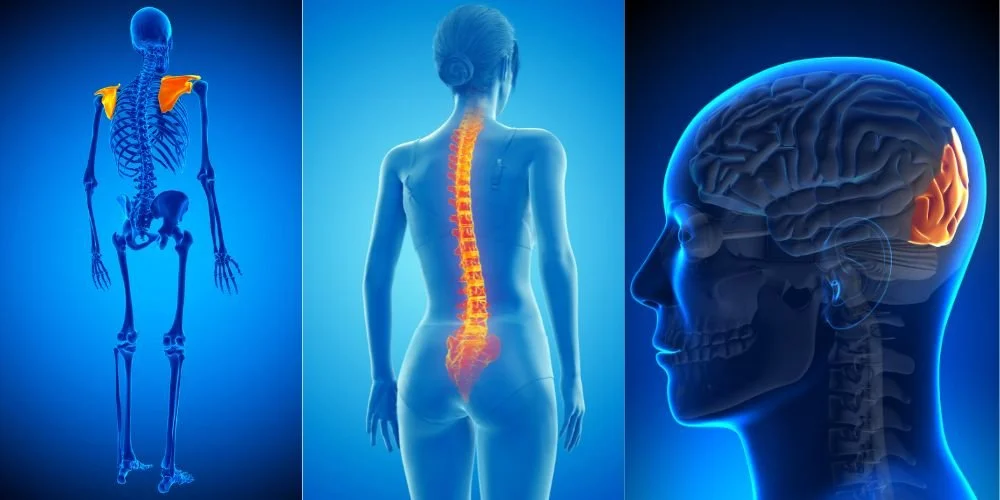
The levator scapulae muscle connects the cervical spine to the upper portion of the shoulder blade and plays a key role in neck movement and posture. It is a frequent contributor to the familiar “stiff neck,” often associated with prolonged screen use, forward-head posture, or sustained stress.
Common symptoms include:
A deep, dull ache at the upper inner corner of the shoulder blade
Neck stiffness and reduced range of motion when turning the head
How acupuncture may help:
Acupuncture treatment often focuses on releasing excessive muscle tension and restoring circulation within the levator scapulae. Targeting myofascial trigger points may help relax shortened muscle fibers, while improved local blood flow supports tissue recovery and reduces fatigue-related discomfort (Zhao, 2008).
2. Thoracic Outlet Syndrome (TOS): Nerve and Vascular Compression
Thoracic outlet syndrome occurs when nerves or blood vessels are compressed in the narrow passageway between the collarbone and the first rib, commonly due to postural strain, repetitive overhead activity, or muscular imbalance.
Common symptoms include:
Pain radiating from the neck into the shoulder and arm
Numbness, tingling, or “pins and needles” sensations in the hand or fingers
How acupuncture may help:
Treatment often emphasizes relaxation of the scalene muscles in the neck and the pectoralis minor in the chest—structures frequently involved in thoracic outlet compression. Acupuncture may also support nerve function by modulating pain signaling and improving neuromuscular coordination, including the use of electroacupuncture in select cases (Vickers et al., 2018).
3. Occipital Nerve Compression (Occipital Neuralgia)
Occipital neuralgia involves irritation or compression of the occipital nerves, which originate in the upper cervical spine and travel toward the scalp. Although the condition arises in the neck, pain is often felt most intensely at the base of the skull or behind the eyes.
Common symptoms include:
Sharp, stabbing, or electric-shock–like pain at the base of the skull
Pain radiating toward the back of the head or behind the eyes
How acupuncture may help:
Acupuncture commonly targets the suboccipital region to release deep muscular tension that may entrap the occipital nerves. Clinical reviews suggest acupuncture can provide meaningful relief for nerve-related headaches and may offer longer-lasting benefit than medication alone for some individuals (Vickers et al., 2018).
A Targeted, Non-Invasive Approach to Care
Neck and shoulder pain are not interchangeable diagnoses, and outcomes improve when treatment is guided by the specific source of dysfunction rather than symptoms alone. By addressing muscular tension, joint mechanics, and nervous system regulation, acupuncture offers a low-risk, integrative option for many individuals seeking relief without long-term medication dependence (Vickers et al., 2018).
If symptoms are severe, progressive, or accompanied by neurological changes, evaluation by a qualified healthcare provider is essential.
To locate a licensed practitioner in the United States, visit the National Certification Board for Acupuncture & Herbal Medicine (NCBAHM) directory. Evidence-based information on safety and clinical research is available through the National Center for Complementary and Integrative Health (NCCIH).
Author Bio
Dr. Nina Jatuparisuthiseen, DAc, L.Ac., C.SMA
Dr. Nina is a licensed acupuncturist and founder of Nina Acupuncture in Westport, Connecticut. She specializes in evidence-informed pain management, sports medicine acupuncture, nervous system regulation, and integrative lifestyle medicine. With over a decade of clinical experience and more than 10,000 hours of hands-on care, she is dedicated to advancing patient-centered, nonpharmacological approaches to modern healthcare