The Second Spring after Menopause: Symptoms, Self-Care, and a TCM Perspective
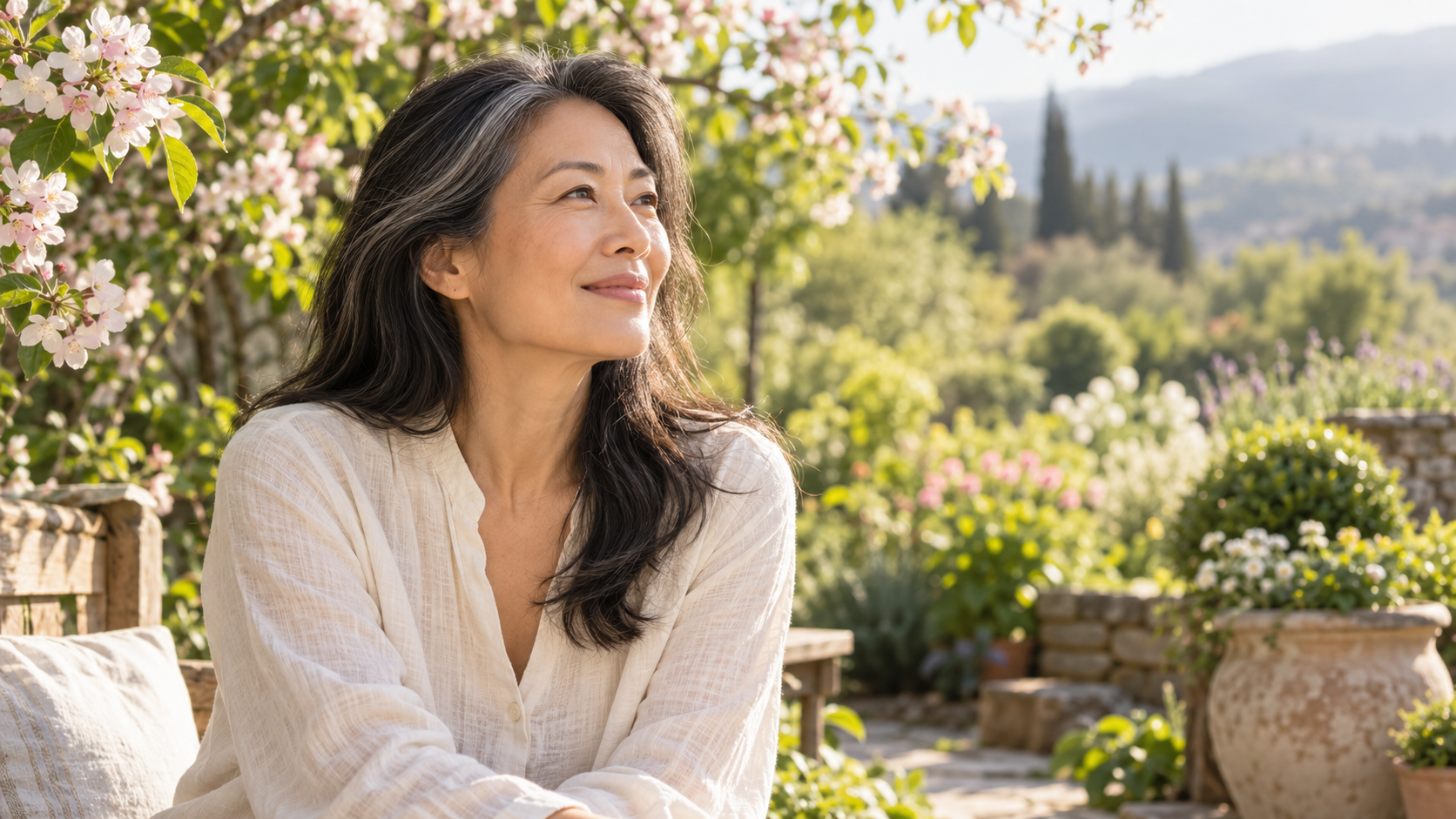
At 48, I am noticing changes I once associated with other women: gray hair, shifting energy, a body that no longer responds to every demand in quite the same way. I am also noticing something else. I know myself better. I am less interested in proving that I can do everything and more interested in choosing what matters.
A recent midlife wellness symposium in Westport, Connecticut, brought these thoughts into focus. Hearing women speak openly about menopause reminded me how easily this transition gets reduced to a list of symptoms. As an acupuncturist and a woman in midlife, I see a fuller story: biology changes, and so can our relationship with work, care, rest, and ourselves.
What Second Spring Means
In Traditional Chinese Medicine, menopause is sometimes called a “second spring.” I love the image because it makes room for renewal without pretending that the transition is easy. A spring does not arrive on command. It follows a season of change.
Perimenopause can bring irregular periods, hot flashes, night sweats, sleep problems, mood changes, and vaginal dryness. Experiences vary widely. Some women have mild symptoms; others find that symptoms disrupt daily life. These changes deserve attention and appropriate care, not a demand to simply endure them.
Traditional Chinese Medicine describes patterns of imbalance using concepts such as Yin and Yang. Yin is associated with cooling, nourishment, and restoration. A practitioner might interpret heat and night sweats as signs of a Yin pattern.
When Life Leaves Little Room to Recover
Many women I meet have spent years caring for children, partners, or aging parents while keeping careers and households moving. They may be skilled at meeting everyone else’s needs and unsure when they last had time to meet their own.
It is tempting to explain every midlife symptom as the result of stress or “depletion.” That would miss the real hormonal changes of menopause. Yet daily life still matters. Interrupted sleep, long hours, little time to eat, and constant responsibility can make an already demanding transition harder to navigate.
I ask patients about more than hot flashes. How are they sleeping? What feels sustainable in their schedule? Do they have space to move, eat, and rest? The answers do not replace a diagnosis. They help us see the whole person who is living through it.
Making Care Personal
There is no single menopause plan for every woman. Hormone therapy is the most effective treatment for hot flashes and night sweats for many eligible patients, and effective nonhormonal options are available. A clinician can help weigh symptoms, medical history, preferences, and risks.
Some women also seek acupuncture as part of their care. Research on acupuncture for hot flashes is mixed, and professional guidelines do not recommend it as a proven treatment for vasomotor symptoms. In my practice, I discuss it as an individualized complementary option, especially when a patient wants space to address sleep, stress, and how she feels overall. In my practice, acupuncture can be a useful complement to conventional care. Some patients tell me they feel better with an individualized plan that includes acupuncture and, when appropriate, Traditional Chinese herbal medicine. Their experiences matter, but I encourage each woman to discuss persistent or disruptive symptoms with her medical clinician so she can consider all her options.
Small changes can still be meaningful: a steadier sleep routine, meals that nourish and satisfy, movement that feels good, and honest boundaries around what one person can carry. Restorative yoga, Qigong, or meditation may provide a welcome pause. They are choices to explore, not another set of tasks to perform perfectly.
Bringing Yin Nourishment to the Table
In Traditional Chinese Medicine, foods such as black beans, black sesame, tofu, seaweed, black ear mushroom, oysters, and pears are often described as Yin nourishing. I think of them as ordinary ways to bring variety and nourishment to the table. Try adding black beans to a soup or grain bowl, sprinkling black sesame over oatmeal, or serving tofu with vegetables. A ripe pear makes a simple afternoon snack. Prepare the foods with steaming, poaching, or boiling, which are considered more Yin-supporting than high-heat frying or grilling.
For a gentle tea ritual, simmer thin slices of pear with a few goji berries and a Chinese date in water for 10 to 15 minutes, then drink it warm. You can eat the softened fruit, too. If you take warfarin, check with your clinician before using goji berries. Chrysanthemum tea is another traditional choice; people with allergies to plants in the daisy family should check before trying it.
The Beauty of Becoming
With World Menopause Day approaching on October 18, I wanted to write about more than symptoms. I wanted to make room for the personal side of this transition, too.
I see my gray hair and wrinkles. I also see years of experience that have made me a more compassionate practitioner and a more honest version of myself. My appearance will continue to change; it does not determine my worth.
Perhaps the invitation of a second spring is to listen with curiosity. What needs care now? What can be released? Which ordinary moments bring joy? For me, the answers often include sunlight, a nourishing meal, movement, connection, and quiet time without an agenda.
Menopause can be uncomfortable, and no one needs to romanticize suffering. With support and room to adapt, this season can also open a different way of living—one shaped less by the pressure to remain unchanged and more by the freedom to become ourselves.
Personalized Acupuncture and Holistic Wellness Care in Westport, CT
Your second spring deserves attention to the whole person. At Nina Acupuncture in Westport, Connecticut, I offer one-on-one acupuncture and personalized holistic wellness care.
If you would like to discuss whether acupuncture fits your care plan, visit my website to learn more or book an appointment online. Together, we can explore your goals and make room for care that fits your life.
Author Bio
Dr. Nina Jatuparisuthiseen, DAc, L.Ac., C.SMA
Dr. Nina is a licensed acupuncturist and founder of Nina Acupuncture in Westport, Connecticut. She specializes in evidence-informed pain management, sports medicine acupuncture, nervous system regulation, and integrative lifestyle medicine. With over a decade of clinical experience and more than 10,000 hours of hands-on care, she is dedicated to advancing patient-centered, nonpharmacological approaches to modern healthcare